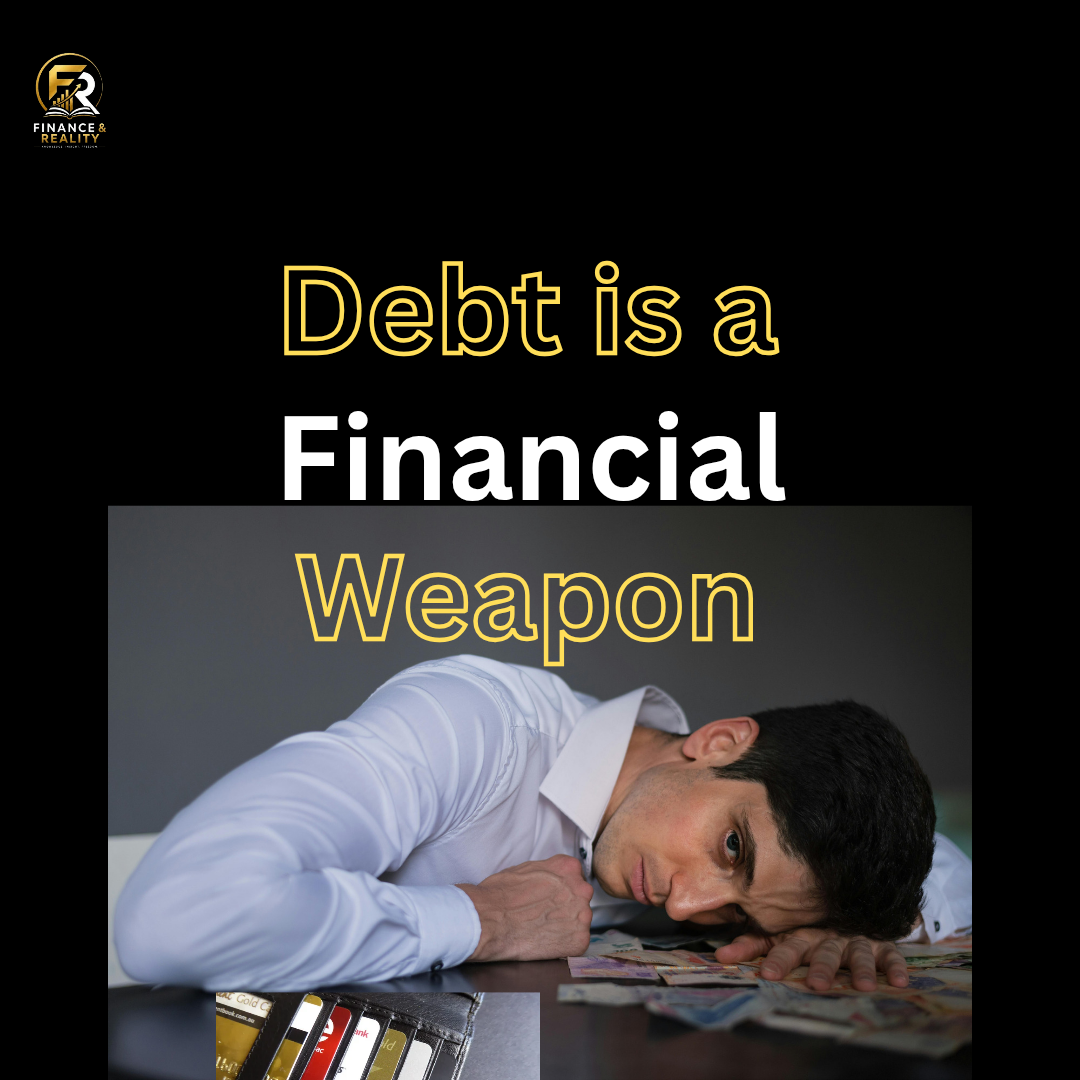
Many times, I have heard people say, “I am in serious debt.” Some people even abandon their SIM cards just to have peace of mind because they cannot face those they owe. They try every possible way to negotiate with the people they borrowed from.
One question I have always asked is this: Why did the other person lend you the money in the first place? Does it mean they have too much money? No. They also have financial responsibilities, yet they still lend money because they expect a return, whether through interest, business, or investment.
To me, debt is neither completely good nor completely bad. It is a powerful financial tool. Most successful businesses, wealthy individuals, and even nations have used debt at one point or another to grow. The difference is not debt itself, but how it is managed. You must be careful, disciplined, and highly calculative before borrowing.
Have you ever wondered why governments continue to borrow money? Debt is not simply a mistake in the financial system; it is part of how the modern financial system operates. Governments borrow to fund infrastructure, healthcare, education, defence, and economic development. Whether those borrowed funds are used wisely or wasted depends on leadership and accountability.
Every economy runs on credit in one form or another. Individuals borrow, businesses borrow, banks lend, and governments issue debt. Money flows through promises to repay. When debt is used wisely, it creates businesses, industries, jobs, and wealth. When it is abused, it creates poverty, inflation, corruption, and economic hardship.
An individual borrows money from a bank or another lender either to solve an urgent financial problem or to invest in an opportunity. The same principle applies to governments. The real question is not whether you borrow, but what you do with the money after borrowing it.
One thing is clear: debt can become a financial weapon. It can build an empire or destroy a life. In a healthy system, borrowed money develops businesses, industries, infrastructure, and economic growth. In a corrupt system, borrowed funds are diverted into private pockets, leaving the people with the burden of repayment while a few individuals enjoy the benefits.
Many of the world’s strongest economies carry large amounts of debt. The United States owes trillions of dollars, yet it remains one of the world’s strongest military and economic powers. China also carries significant debt while remaining a global leader in manufacturing, production, and infrastructure. Their borrowed funds have largely been used to expand productive capacity and strengthen national development.
The problem is not borrowing. The problem is borrowing without productive results. In Nigeria, many people believe public borrowing has often failed to produce enough visible improvements because of corruption, poor planning, and weak accountability. When borrowed money is wasted, the nation remains economically and infrastructurally behind while future generations bear the repayment burden.
As an individual, borrowing can also be useful when done wisely. You may borrow to expand an existing business, purchase productive assets, or increase your capacity to generate income. Those who lend you money are not foolish; lending is also a business. They expect you to repay with interest, and that is how they make their own profit.
The key is learning the difference between good debt and bad debt. Before taking any loan, you should already have a realistic repayment plan. Your financial reputation matters. In many real-life situations, your credit history speaks louder than your academic qualifications because it tells people whether you can be trusted financially.
Good Debt vs Bad Debt
Understanding the difference between good debt and bad debt is one of the most important financial lessons anyone can learn.
Some people proudly say, “I never borrow money.” That sounds good, but the more important question is, what kind of debt are you avoiding?
Good Debt
If you are employed and your organisation offers staff loans with little or no interest and flexible repayment through salary deductions, such a loan can become a good opportunity. Instead of using it for unnecessary spending, use it to expand an existing business or create another source of income. Your salary provides a repayment structure while your investment has time to grow.
Good debt generally helps you build assets or increase your future income.
Bad Debt
A common mistake is borrowing money to start a business without any experience, customers, or backup income. That is very risky because there is no stable system to support repayment if the business takes time to succeed.
Another example of bad debt is borrowing at very high interest rates. If the interest keeps consuming your profits, all your hard work may produce little or no financial progress.
Financial education is what helps you recognise these differences. Ignorance is expensive, and in finance, it can cost you years of hard work.
Many people borrow money only to spend it on everyday expenses such as food, transport, clothing, rent, or other basic needs. While these are necessary expenses, they do not generate income. That is why everyone needs proper financial planning, discipline, and a long-term strategy. Businesses often take time before they become profitable, but your daily expenses continue whether your business succeeds immediately or not.
Psychologically, borrowing money is easy. Paying it back is the difficult part. That is why debt can become a tool that limits people’s financial freedom when it is not properly managed.
If someone comes to borrow money from you, no matter how emotional their story may be, never lend more than you can comfortably afford to lose. Circumstances change. Today’s friend can become tomorrow’s enemy when money is involved.
Many businesses have collapsed because too many customers owed them money. That is why you often see signs that say, “No credit today. Come tomorrow.” Business owners are simply protecting their cash flow because too much unpaid debt can destroy even a profitable business.
Debt itself is not the enemy. Ignorance, poor planning, and lack of financial discipline are.
Finance is not just about making money; it is about understanding reality.
There is still more to reveal.